The Owlhoot Trail
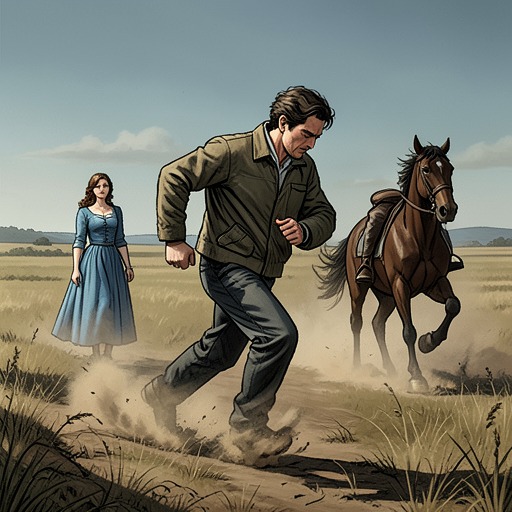
The OutlawsThe Owlhoot Trail is the name Del Delaney gives to the outlaw life he considers after fleeing Montana: a southbound road that begins as an escape from arrest and becomes a choice about what kind of life remains possible. Its significance lies in that shift. Del does not begin as a committed criminal; he weighs outlawry against the hope of returning home, the danger of prison, and his reluctance to prey on people who are already struggling.
Flight and the first turn toward outlawry
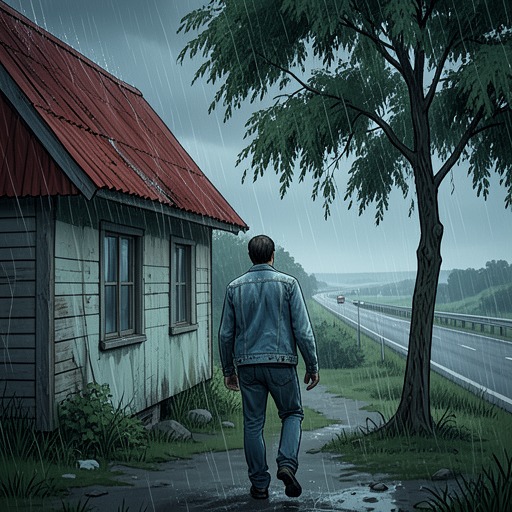
After leaving town, Del rides north as though headed for Wineglass, then turns southwest once he is out of sight. He crosses into Wyoming, believing its sheriff less likely to pursue him than a Montana lawman, and avoids larger towns and county seats. He sometimes lives on game, but more often buys supplies at country stores. In late spring, rain and occasional snow make the journey uncomfortable; he accepts that hardship as preferable to a cell in Deer Lodge penitentiary.
The flight gives Del time to imagine what lies ahead. He considers finding work, moving from place to place, and perhaps eventually going home or returning to northern Montana if the law forgets him. But the prospect of drifting indefinitely does not appeal to him, and he doubts that the charge against him will simply disappear while Sid Blackwell remains a deputy and Sid’s father is a judge. The outlaw trail first appears as an alternative to a future he feels he cannot safely reclaim.
From reluctant labor to a criminal plan
When his money runs out, Del finds work in Star Valley with a Mormon outfit whose operation is more farm than ranch. He must learn unfamiliar tasks, including plowing. The physical work sharpens a thought already taking shape: since he has been branded an outlaw, perhaps he should become one. His reasoning is not that outlaw life will be easy. The journey has already taught him its costs—cold, hunger, exhaustion, and the constant habit of looking back for pursuers—but those costs seem less decisive than the prospect of prison or a return to a life he cannot resume.
Del stays for a month, then quits when the boss’s wife asks him to hoe her garden. He heads south and considers robbing a bank as the way to begin. He has thought about taking money from small stores where he has bought supplies, but judges their safes unlikely to contain enough and feels sympathy for the proprietors, who earn little and have families to support. That hesitation unsettles him: he wonders whether he is mean enough to be an outlaw, while recognizing that committing a first robbery would close off the possibility of testing the idea harmlessly. The trail is therefore both a proposed livelihood and a moral threshold.
A shared predicament, not a shared history
Del’s decision takes shape alongside The Kid and John Smith, but the three men do not arrive at outlawry by the same route. Del thinks of the prison awaiting him at Deer Lodge and concludes that, if he must spend his life avoiding it, he might as well live more comfortably. The Kid treats further robbery as unavoidable: he says he has killed three men and held up, or helped hold up, six banks, and that he has no choice but to continue. He has squandered much of the money gambling and spent the rest on women in Helena and Butte, details that make his repeated need for money different from Del’s more tentative calculation.
John Smith describes himself as effectively trapped too. He helped The Kid rob one bank, enough to risk recognition, but identifies his first-degree murder charge back home as the more lasting obstacle. Del argues that John might be acquitted, since a killing in defense of one’s home could be regarded in many communities as justifiable homicide. Their exchange exposes a tension at the center of the phrase: legal exposure binds the men together, but their conduct and their assessments of justice remain distinct.
The trail reconsidered
The outlaw trail does not become an irrevocable destiny for every companion. Later, Del privately considers leaving the others, finding riding work, and avoiding further crimes in the hope that his own charges might eventually be dropped. The Kid rejects retreat as impossible for himself and presses the logic that a man already deep in outlawry can only avoid jail. Del’s earlier sense that the first bank robbery would mean there was no turning back thus sits beside a later recognition that choices can still diverge, even under pressure.
Near the end, after Del and Kate Muldoon affirm that they belong together, John Smith says he has been thinking of going home to face the consequences rather than keep running. His decision reverses the fatalism that had defined the trail for him: where The Kid sees no way back and Del has repeatedly weighed the costs of escape, John imagines facing the law directly. The phrase consequently holds two meanings at once: the road of flight and crime, and a contested way of life whose apparent permanence can still be challenged.